

Terra Logistics
Introduction
Global trade often brings to mind massive container ships crossing oceans or aircraft racing against the clock, yet the real backbone of everyday commerce is far closer to the ground. Land freight plays a central role in moving raw materials, finished goods, and essential supplies between factories, ports, warehouses, retailers, and consumers. Without efficient overland transportation, even the most advanced maritime or air networks would stall.
In today’s interconnected economy, businesses depend on reliable logistics systems that balance cost, speed, flexibility, and environmental responsibility. Land freight sits at the intersection of all these priorities. It connects rural producers with urban markets, links industrial hubs across borders, and supports just in time inventory models that reduce waste and improve cash flow.
This article explores how land freight supports modern supply chains, why it remains indispensable despite technological change, and how businesses can optimize its use. You will learn about its core components, operational models, advantages and limitations, and the strategic decisions that turn overland transport into a competitive advantage. Whether you are managing a growing e commerce brand, overseeing manufacturing distribution, or simply seeking to understand logistics at a deeper level, this guide provides a practical and analytical perspective.
Understanding the foundations of land freight
What land freight really means in practice
Land freight refers to the transportation of goods over land using road and rail networks. It includes short distance local deliveries and long haul cross border movements. While the term sounds simple, the operational reality is complex. Each shipment involves route planning, vehicle selection, regulatory compliance, scheduling, tracking, and coordination with other transport modes.

At its core, land freight provides the physical connection between supply chain nodes. Factories rely on it to receive raw materials. Ports depend on it to move containers inland. Retailers use it to replenish shelves. Consumers experience it as last mile delivery, the final step that determines customer satisfaction.
Road freight versus rail freight
Road and rail are the two main pillars of land freight, each serving distinct purposes.
Road freight is valued for flexibility. Trucks can reach almost any destination with road access. This makes road transport ideal for door to door delivery, time sensitive shipments, and routes where rail infrastructure is limited. It also supports a wide range of cargo types, from small parcels to oversized machinery.
Rail freight excels in moving large volumes over long distances at lower unit costs. Trains can carry heavy loads efficiently, making them suitable for bulk commodities, intermodal containers, and high volume industrial goods. Rail also tends to produce lower emissions per ton kilometer compared to road transport, which is increasingly important for sustainability goals.
Most supply chains use a combination of both. Rail handles the long haul, while road transport manages first mile and last mile distribution. The balance depends on geography, infrastructure quality, cargo characteristics, and service expectations.
Key stakeholders in overland logistics
Effective land freight operations involve multiple stakeholders working in coordination:
Shippers who own the goods and define service requirements
Carriers who operate trucks or trains
Freight forwarders and logistics providers who plan, consolidate, and manage shipments
Customs authorities and regulators who enforce safety, tax, and trade rules
Warehouses and distribution centers that store and process cargo
Clear communication among these parties reduces delays, controls costs, and improves reliability. Digital platforms increasingly support this coordination by providing real time visibility and data sharing.
Strategic importance of land freight in supply chains
Enabling domestic and regional trade
While international shipping often captures headlines, domestic and regional trade accounts for a significant share of economic activity. Land freight makes this trade possible. It connects agricultural regions with food processing plants, industrial zones with export terminals, and cities with surrounding communities.
For many countries, especially those with large landmasses or limited coastline access, overland transport is the primary logistics channel. Efficient road and rail networks support regional integration, allowing businesses to source inputs and reach customers across borders without relying solely on maritime routes.
Supporting just in time and lean operations
Modern supply chains increasingly favor lean inventory strategies. Companies aim to hold less stock, reduce storage costs, and respond quickly to changes in demand. Land freight supports these goals by offering frequent, scheduled services and faster transit times over short and medium distances.
Reliable overland transport allows manufacturers to receive components as needed rather than stockpiling them. Retailers can replenish stores based on real time sales data. The result is improved cash flow, reduced obsolescence, and greater operational agility.
Enhancing resilience and flexibility
Recent global disruptions have highlighted the importance of resilient supply chains. When ports face congestion or air capacity tightens, land freight often provides alternative routes and solutions. Diversified overland corridors can reduce dependency on a single gateway or mode.
Flexibility is another strength. Truck routes can be adjusted quickly in response to weather, demand spikes, or infrastructure issues. This adaptability helps businesses maintain service levels even under challenging conditions.
Integrating with multimodal logistics
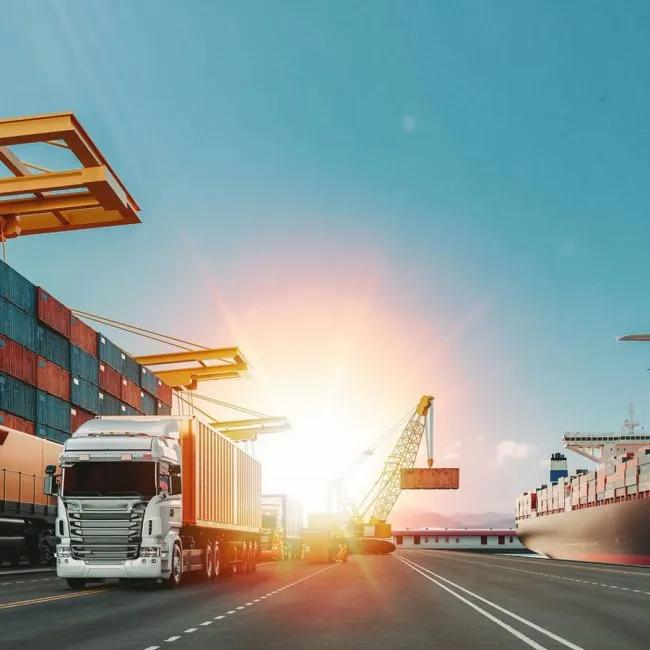
Land freight rarely operates in isolation. It is a key component of multimodal logistics systems that combine road, rail, sea, and air transport. Containers arriving by ship typically continue their journey inland by truck or train. Air cargo often relies on road transport for airport transfers and final delivery.
Logistics providers design these integrated solutions to balance cost and speed. For example, high value goods may move by air for the long haul and by truck locally, while bulk cargo may use rail and road combinations. Terra Logistics offers ocean freight, road freight, air freight, warehousing, customs clearance project logistics, demonstrating how comprehensive service portfolios support seamless multimodal flows.
Operational models and cost considerations
Full truckload and less than truckload services
Road based land freight commonly uses two main service models.
Full truckload services dedicate an entire vehicle to one shipment. This option suits large volumes, sensitive cargo, or routes requiring direct delivery. It often provides faster transit times and reduced handling, which lowers the risk of damage.
Less than truckload services consolidate shipments from multiple shippers into one vehicle. This model reduces costs for smaller loads by sharing capacity. However, it involves more handling and potentially longer transit times due to multiple stops.
Choosing between these models depends on shipment size, urgency, budget, and risk tolerance. Many businesses use a mix, adjusting based on seasonal demand and customer requirements.
Rail freight pricing and capacity planning
Rail freight pricing typically reflects distance, weight, volume, and service level. While rail can offer lower costs per unit for long distances, it requires careful planning. Train schedules are less flexible than truck routes, and capacity may be constrained during peak periods.
Effective rail freight use involves forecasting demand, booking capacity in advance, and coordinating with road transport for terminal transfers. When managed well, rail can significantly reduce logistics costs and environmental impact.
Factors influencing land freight costs
Several variables shape the total cost of land freight:
Fuel prices, which directly affect road transport expenses
Labor costs, including driver wages and compliance requirements
Infrastructure quality, influencing transit time and vehicle wear
Regulatory fees, tolls, and taxes
Cargo characteristics, such as weight, dimensions, and handling needs
Understanding these factors helps businesses negotiate contracts, select routes, and evaluate trade offs between cost and service.
Technology and cost optimization
Digital tools play a growing role in cost management. Route optimization software reduces fuel consumption and transit time. Telematics systems monitor vehicle performance and driver behavior, lowering maintenance and insurance costs. Data analytics identifies inefficiencies and supports continuous improvement.
Investing in technology requires upfront resources, but the long term savings and performance gains often justify the effort.
Sustainability and future trends in land freight
Environmental impact and mitigation strategies
Transportation is a major source of greenhouse gas emissions, and land freight is under increasing pressure to improve sustainability. Road transport, in particular, faces scrutiny due to fuel consumption and urban congestion.
Mitigation strategies include:
Shifting suitable cargo from road to rail, which generally produces fewer emissions per ton kilometer
Adopting fuel efficient vehicles and alternative fuels such as electricity or biofuels
Improving load planning to reduce empty miles
Using urban consolidation centers to streamline last mile delivery
Regulations and customer expectations increasingly reward companies that demonstrate environmental responsibility.
Infrastructure development and policy support
Public investment in roads, railways, and intermodal terminals shapes the future of land freight. Improved infrastructure reduces transit times, enhances safety, and lowers operating costs. Cross border corridors and harmonized regulations support regional trade and economic growth.
Policy measures, such as incentives for rail use or emissions based pricing, influence modal choices. Businesses that stay informed about infrastructure projects and policy trends can position themselves to benefit from new opportunities.
Automation and digitalization
Automation is gradually transforming land freight. Advanced driver assistance systems improve safety. Autonomous vehicle technology, while still developing, promises long term efficiency gains. In rail transport, automated signaling and scheduling enhance capacity utilization.
Digitalization extends beyond vehicles. Electronic documentation, real time tracking, and integrated logistics platforms increase transparency and reduce administrative burden. These innovations support faster decision making and better customer service.
Evolving customer expectations
Customers today expect reliable delivery, real time visibility, and clear communication. E commerce growth has raised standards for speed and convenience, even in business to business logistics.
Land freight providers respond by offering tracking portals, proactive notifications, and flexible delivery options. Meeting these expectations is no longer optional. It is a key factor in customer retention and brand reputation.
Conclusion and call to action
Land freight remains a cornerstone of global and regional supply chains. Its ability to connect production, distribution, and consumption points makes it indispensable across industries. From supporting just in time manufacturing to enabling last mile delivery, overland transport shapes how goods move and how businesses compete.
Understanding the foundations, strategic importance, operational models, and future trends of land freight empowers decision makers to optimize their logistics networks. By balancing cost, speed, resilience, and sustainability, organizations can turn transportation from a necessary expense into a source of value.
Now is the time to review your overland logistics strategy. Assess your routes, service models, and technology tools. Explore opportunities to improve efficiency, reduce environmental impact, and enhance customer experience. Partner with logistics experts who understand the complexities of modern supply chains and can tailor solutions to your needs. Taking a proactive approach today will position your business for stronger performance and long term growth.